
Eau de Citron Noir
Ambrocenide lemon

A reader suggested writing about Hermès’ Eau de Citron Noir and I thought to happily oblige as it is a relatively simple fragrance in its construction and conceptually, to detail to readers. As we shall see, in some ways it is completely counter to the notion and general purpose of a cologne.
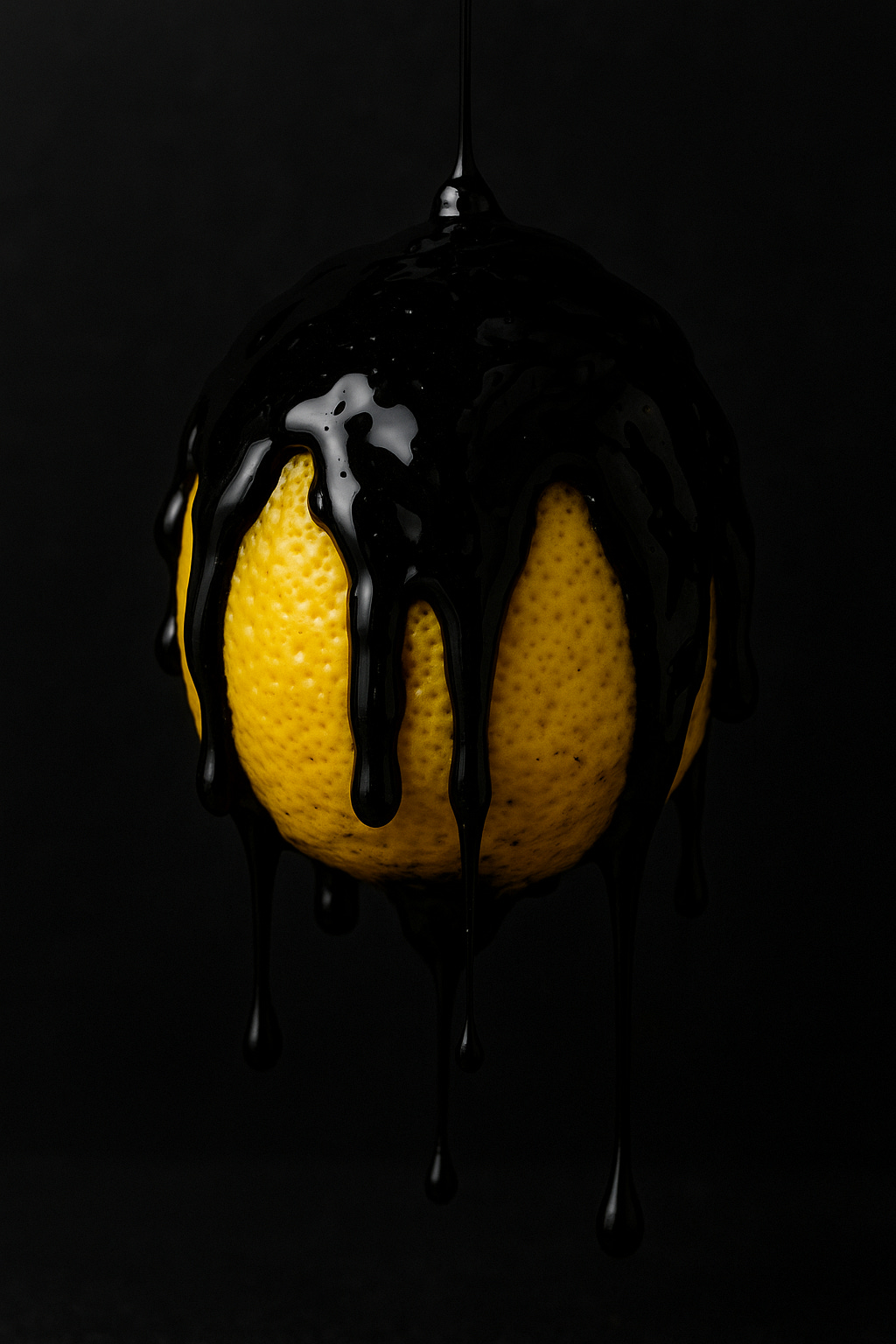
The fragrance is said to be inspired by dried limes, also known as black limes, which is particularly sour with an umami aspect. This is not conveyed by the fragrance (which might be challenging to render wearable if done literally) but it takes literally to heart blackness and limes.
Approximately 50% of the formula is lemon oil, unsurprisingly, supported by some citrus materials like methyl pamplemousse (the modern grapefruit aromachemical in Terre), linalyl acetate (a major constituent of bergamot), and citral (lemony rosy found in lemon, cedrat and the petitgrain of the lemon tree among many other naturals), as well as some natural bergamot oil.
To extend the lemony facet further into the dry down, some 1% elemi has been used along with a trace of incense. Elemi is strongly lemony and peppery, less resinous than any incense product. It has also been very popular in modern fougères like Dior’s Sauvage and it would have been my choice here too.
For the black contrast, it mostly consists of the use of black pepper oil (around 1%) along with black tea absolute, traces of guaiac wood, patchouli with patchoulol, and birch tar, as well as importantly the nuclear woody amber, Ambrocenide (0.1%).
Going back to elemi, this ties in well with the black pepper. The smokiness of the birch tar with guaiac wood and black tea is also the most logical choice. I would not normally describe Ambrocenide as synesthetically black but against the brightness of so much citrus, it does give a darker contrast.
In the dry down, some muscenone gives a nitro musk aspect, and we have the use of both ambrox in addition to the time old Firmenich base, Fixateur which was first introduced to the market decades ago as the only way perfumers outside Firmenich could use the then captive ambrox product. It has a woody violet facet, is incredibly smooth in texture and lightly marine dirty, but not nearly as dirty as ambrinol or bases like Ambergris Oliffac from IFF. It can integrate very easily in a formula that does not contain woody ambers or ambrox neat.
By modern standards, 0.1% Ambrocenide is not a lot and while the Fixateur base gives some refinement to the dry down, it is very dry and piercing, as is the nature of Ambrocenide. Part of why I would describe this fragrance as not in alignment with the traditional concept of a cologne is that it is anything but fleeting. When the lemon is long gone, as well as the other elements clinging to freshness, the Ambrocenide remains. That being said, I do find the initial minute or two of the fragrance to be very satisfying, because of this sharp contrast.
While the fragrance has no relation to its cited source of inspiration — dried limes or black limes — it has to be applauded also for staying relatively true to its own name.
I loathed this one as soon as I smelled. The dreaded Ambrocenide thrust its toothbrush up my nasal cavity, and I couldn't smell anything else... At the time, I imagined how Jean-Claude Ellena would feel about it - he was never big on spiky woods, was he?
Not a fan of this one, I dont like the fuzzy and heavy musk/coumarin-like feel on the drydown. It feels too much like a 5 o'clock shadow after a few hours. Is that the ambrocenide too? But I respect the originality of the top and mid phases.